With the rising popularity of minimally-invasive cosmetic procedures like Botox, filler injections, and laser treatments, many people are wondering, “Can the estheticians at my favorite med spa perform these for me?” The answer is not that simple.
Last reviewed November 4, 2026. We checked each legal point below against state statutes, administrative rules and state board websites, and removed points we could not confirm. Rules change often, so confirm with your state licensing board or a healthcare attorney before you rely on them.
None of the states we checked for this article lets an esthetician give injections under an esthetics license. Some, like Nevada, let advanced estheticians perform certain nonablative procedures under the supervision of a licensed health care professional.
Regulations vary widely - some states prohibit estheticians from performing any procedure that punctures the skin. This state-by-state patchwork of rules has created confusion among estheticians looking to expand their services, as well as clients seeking these medical treatments.
Read on to clear all your doubts once and for all. In turn, you’ll gain invaluable insights into the evolving landscape around medical esthetics regulations.
What Procedures Can Estheticians Legally Perform?
Estheticians are licensed skincare specialists who receive extensive training in providing professional facials, chemical peels, microdermabrasion, eyelash extensions, waxing services, and laser hair removal treatments.
- These non-invasive skincare procedures and enhancements fall squarely within an esthetician's scope of practice in nearly all states.
- However, when it comes to more advanced medical procedures like injectable wrinkle reducers and dermal fillers, regulations become much more restrictive.
- Every state we checked for this article (California, Illinois, Massachusetts, Nevada, New York, Texas and Washington) keeps injections out of esthetics. These are restricted to licensed medical professionals.
For example, estheticians cannot legally inject neuromodulators like Botox or Dysport, hyaluronic acid fillers like Juvederm or Restylane, platelet-rich plasma (PRP), or other injectable cosmetic treatments. These are considered part of the practice of medicine, making it illegal for uncertified estheticians to perform injections unless they hold an appropriate medical license.
Independent or unsupervised injecting remains outside the boundaries of what an esthetician can legally perform on their own based on training and licensure.
Which States Allow Limited Esthetician Injections Under Physician Supervision?
Among the states we checked, none. Here is what Nevada and Illinois actually allow:
Nevada
Nevada licenses advanced estheticians. Under NRS 644A.545, an advanced esthetician may perform nonablative esthetic medical procedures only under the supervision of a health care professional (a physician, physician assistant or advanced practice registered nurse). During the procedure, that professional must be reachable in real time and stay within 60 miles or 60 minutes of the location. The supervising professional files a collaboration form with the Nevada State Board of Cosmetology, and an advanced esthetician may never perform an ablative procedure.
Injections are not part of this. The Board's scope-of-practice chart lists any and all injections, Hyaluronic Pen services and cosmetic fillers (Botox, Juvederm, etc.) as prohibited or out of scope.
Illinois
Illinois prohibits cosmetologists and estheticians from using any technique, product or practice intended to affect the living layers of the skin (225 ILCS 410/3-1 and 410/3A-1). The Illinois Department of Financial and Professional Regulation (IDFPR) lists Botox, collagen injections and chemical peels other than superficial peels as the practice of medicine, outside an esthetician's scope.
A licensed physician may delegate these procedures, but the person doing the delegated work may not present themselves as a cosmetologist or esthetician while doing it. The client must be the physician's patient, and the physician must examine them and decide the course of treatment.
Regarding Other States
The other states we checked also keep injections out of esthetics. See the table below.
What Training is Required for Supervised Injections by Estheticians?
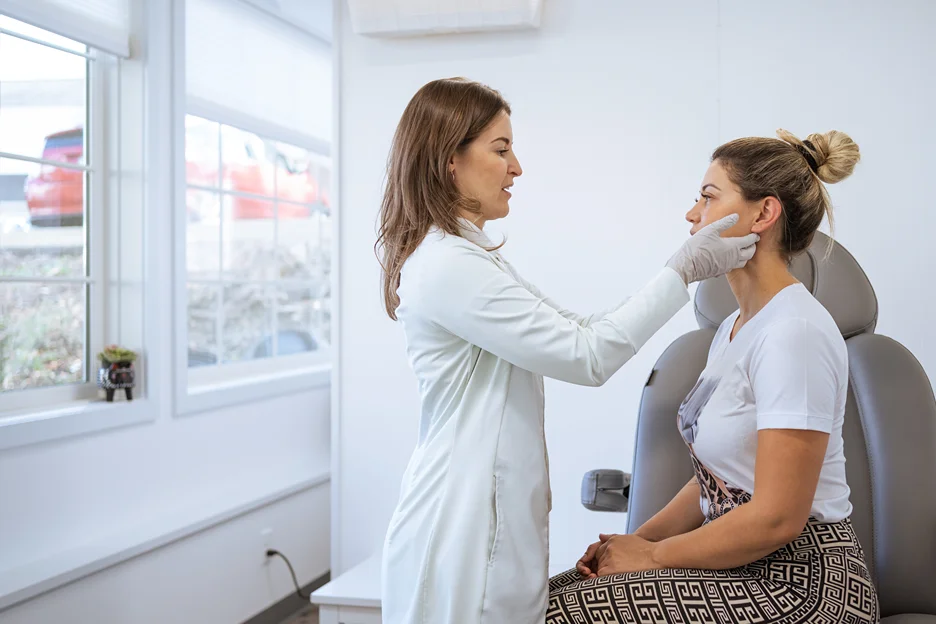
Where a state lets a physician delegate injections, as Illinois does, the person receiving the delegation needs appropriate training, and the physician must supervise them.
Typical requirements include:
- Hands-on instruction and practice in the specific injection procedures the esthetician will be delegated to perform, like Botox or dermal filler injections. This involves needling techniques, dosage calculation, anatomical injection sites, use of injection pens, and more.
- Comprehensive education in facial anatomy, physiology, neuroscience, and pharmacology related to how cosmetic injectables work, interact with the body, and any contraindications.
- Training on the specific neuromodulators, dermal fillers, or other products to be injected along with appropriate dosages, side effects, risks, and complications management.
- Certification in cardiopulmonary resuscitation (CPR), use of autoinjector pens, and emergency response preparedness in case of adverse events.
- Review of relevant regulations, compliance standards, proper record-keeping, mandatory reporting, and the physician delegation process.
- Training in patient privacy protections, ethical requirements, and minimizing liability exposure.
- Ongoing oversight by the licensed supervising physician is critical as well. They assume ultimate responsibility for reviewing each treatment plan, providing medical directives, delegating the hands-on procedure to the esthetician, remaining on-site for supervision and consultation, and managing any complications or concerns that arise.
Proper training, certifications, and physician supervision ensure certified estheticians have the requisite skills, knowledge, and support to safely provide permitted injections that are low-risk yet beneficial when regulations are followed.
Esthetician Prohibited Procedures by State
As you can see in the table below, certain states are crystal-clear as to what procedures are off-limits to estheticians. Others are more nonspecific in their policies.
| State | Confirmed Prohibited Procedures |
|---|---|
| California | Injections of any sort, lasers of any kind, microneedling, and other services the Board lists as out of scope |
| Illinois | Any technique, product, or practice intended to affect the living layers of the skin |
| Massachusetts | Medical and invasive procedures |
| Nevada | Ablative esthetic medical procedures, and any injections or cosmetic fillers |
| New York | Applying dye to eyelash or eyebrow hair (silver nitrate tinting is listed under the cosmetology license only), and injectables such as neurotoxins, dermal fillers and PRP, which the state lists as medical |
| Texas | Injectables, fillers, and other medical-type procedures that require the use of needles |
| Washington | Administration of injections (RCW 18.16.020) |
Clarifying Physician Liability When Delegating Esthetic Procedures
When a physician delegates an injectable treatment like Botox, strict oversight protocols must be followed to minimize liability risks.
They must directly evaluate patients, establish medical necessity, obtain informed consent, calculate product dosage, and be immediately available to intervene if complications arise.
Clear policies should delineate the tasks estheticians can perform, like prepping injection sites and post-procedure care, versus the actual needle injection. After all, proper training and certification in the delegated duties are also required.
Doctors who improperly delegate medical procedures to underqualified personnel put their licenses and patients at risk. As such, smart physicians utilize estheticians only within their defined scope of practice to avoid negligence and disciplinary action.
Recent Scope of Practice Changes in Certain States
The latest legislative initiatives and proposed regulations in several states aim to expand or restrict permitted procedures for licensed estheticians, highlighting the evolving landscape around their scope of practice.
New York
New York's Department of State procedure chart (revised July 15, 2026) lists laser hair removal under the cosmetology or esthetics license. It lists other laser procedures as medical.
Nevada
Nevada Senate Bill 249 (2023) took effect on October 1, 2023. The Nevada State Board of Cosmetology's chart now lists medium-depth chemical peels (epidermis and papillary dermis) as an advanced esthetic service that requires health care professional supervision.
FAQs
Q: Are There States That Allow Estheticians to Administer Botox?
A: None of the states we checked lets estheticians administer Botox under an esthetics license. Nevada's Board of Cosmetology lists Botox and other cosmetic fillers as out of scope, and Illinois treats Botox as the practice of medicine.
In Illinois, a physician may delegate Botox to a trained person, but that person may not present themselves as an esthetician while doing it.
Q: What States Can You Do Injectables with Just an Esthetician License?
A: None of the states we checked (California, Illinois, Massachusetts, Nevada, New York, Texas and Washington) allows injectable procedures with only an esthetics license.
Conclusion

The regulations around what medical aesthetic procedures estheticians can legally perform vary widely across the United States. Some states, like Nevada, let advanced estheticians perform certain nonablative procedures under health care professional supervision, but none of the states we checked lets estheticians give injections under an esthetics license.
Injectables stay with licensed medical professionals. In Illinois, for example, a licensed physician may perform and delegate them, within a physician-patient relationship with the person treated.
Are you an esthetician who wants to expand your skills and services? Face Med Store offers online aesthetic training courses, including cosmetic injectables courses.
Related reading: med spa regulations by state, how to become a medical esthetician and Pennsylvania medical spa regulations.