
Shop
Categories
Microcannulas for Medical Professionals
Slash Your Supply Costs: Same Quality, Better Prices on Microcannulas
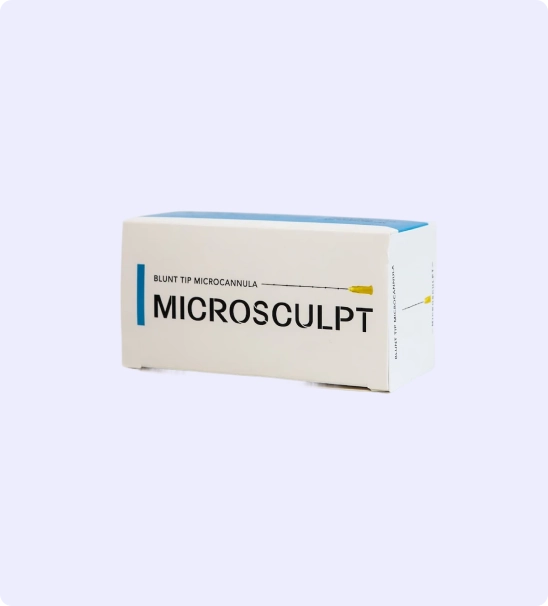
24 Gauge 38 mm (1.5 inch) Microcannulas
-10%Price range: $83.00 through $145.00
Price range: $74.70 through $130.5024 Gauge 50 mm (2 inch) Microcannulas
-10%Price range: $83.00 through $145.00
Price range: $74.70 through $130.5025 Gauge 38 mm (1.5 inch) Microcannulas
-20%Price range: $83.00 through $145.00
Price range: $66.40 through $116.0025 Gauge 50 mm (2 inch) Microcannulas
-10%Price range: $83.00 through $145.00
Price range: $74.70 through $130.5027 Gauge 38 mm (1.5 inch) Microcannulas
-10%Price range: $83.00 through $145.00
Price range: $74.70 through $130.5030 Gauge 25 mm (1 inch) Microcannulas
-10%$180.50$162.45
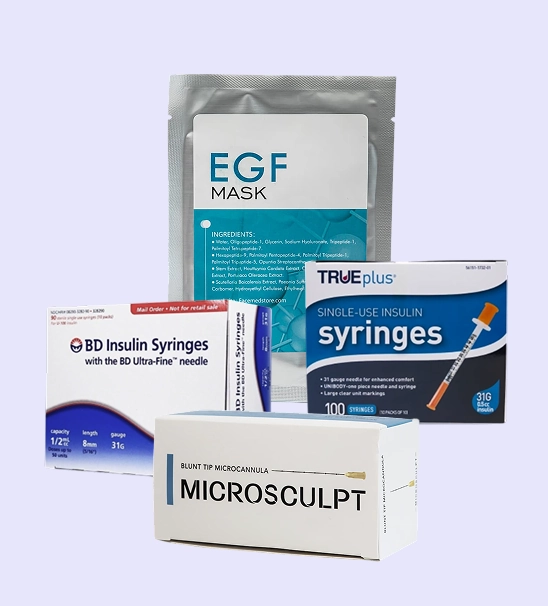
Microcannula Complete Injection System
$275.00Microcannula Multi-Gauge Precision Set
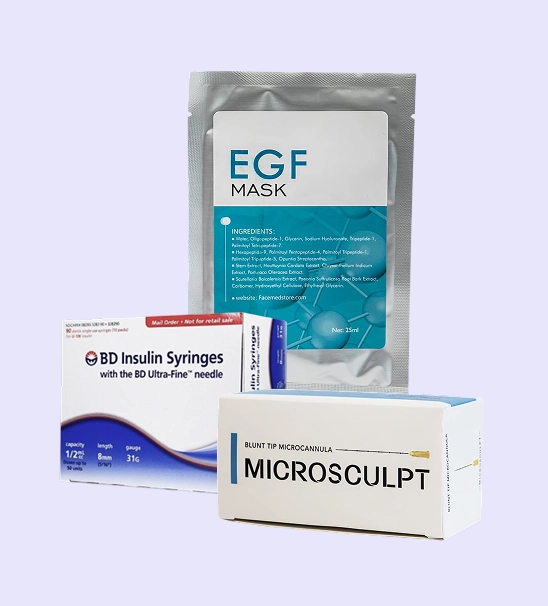
$399.00Microcannula Professional Starter Kit
$215.00
Products per page
What Is a Microcannula?
A microcannula is a flexible, blunt-tipped injection instrument used in aesthetic medicine to deliver dermal fillers, biostimulators, and PRP through subcutaneous tissue planes.
Unlike hypodermic needles, microcannulas feature an atraumatic tip that separates tissue fibers rather than cutting them, which reduces bruising, vascular puncture risk, and patient downtime.
Microcannulas range from 18-gauge to 30-gauge with lengths from 25mm to 70mm.
Finally — Injection Instruments Designed by Practitioners, Not Purchasing Departments
You’ve held cannulas that kinked mid-procedure. You’ve watched product leak from loose Luer lock connections. You’ve explained to patients why their bruising lasted two weeks instead of two days.
Face Med Store eliminates those variables. Founded in 2019 by medical professionals, we engineer microcannulas for the complications you actually encounter — not the ones that look good in a product catalog.
The Face Med Store Microcannula Specifications
Gauge and Length Options
Face Med Store stocks microcannulas across the full clinical range.
Gauge selection determines product flow viscosity; length determines tissue plane accessibility.
| Gauge | Diameter | Best For | Compatible Products |
|---|---|---|---|
| 18G | 1.27mm | Deep volumization, buttock augmentation | High-viscosity HA fillers, Sculptra |
| 21G | 0.81mm | Cheek volumization, jawline contouring | Medium-viscosity HA fillers |
| 25G | 0.51mm | Nasolabial folds, marionette lines, tear troughs | Standard HA fillers, Radiesse |
| 27G | 0.41mm | Lip borders, fine line correction | Low-viscosity HA fillers |
| 30G | 0.31mm | Superficial hydration, skin boosters | Profhilo, Skinvive, mesotherapy solutions |
| Length | Depth Access | Clinical Application |
|---|---|---|
| 25mm | Superficial dermis | Perioral lines, crow’s feet, localized touch-ups |
| 38mm | Mid-dermis | Nasolabial folds, oral commissures |
| 50mm | Deep dermis to subcutaneous | Cheek volumization, temple hollowing |
| 70mm | Full subcutaneous plane | Jawline contouring, large-area treatment with single entry point |
Construction and Engineering
Blunt-Tip Geometry: The atraumatic tip displaces tissue fibers laterally rather than severing them. This separation mechanism preserves vascular integrity — the cannula pushes vessels aside instead of puncturing through them.
316L Stainless Steel Shaft: Medical-grade 316L stainless steel provides the flex-to-rigidity ratio that prevents kinking in fibrous tissue while maintaining tactile feedback. You feel resistance changes as the tip transitions between tissue planes.
Radiopaque Coating: Visible under fluoroscopy for practitioners performing deep-plane volumization or working near anatomical danger zones. The coating doesn’t affect flexibility or product flow.
Laser-Etched Depth Markings: Millimeter graduations along the shaft confirm insertion depth without estimating. Critical for tear trough work where 1-2mm determines whether product sits in the correct plane.
Universal Luer Lock Hub: Secure-twist connection fits all standard syringes. The ergonomic hub geometry reduces finger fatigue during 30+ minute full-face sessions.
How Microcannulas Reduce Complication Rates
The mechanism is mechanical, not theoretical:
- The blunt tip contacts a blood vessel wall
- Vessel elasticity causes the wall to deflect rather than rupture
- The cannula slides past the intact vessel
- Product deposits in the target plane without intravascular entry
Hypodermic needles can’t replicate this interaction. Their beveled cutting edge severs vessel walls on contact, creating the bruising and vascular occlusion risk that microcannulas eliminate.
Face Med Store cannulas maintain this deflection behavior because the tip geometry is manufactured to consistent tolerances — not approximated from batch to batch.
Clinical Applications by Procedure Type
Tear Trough Correction
The infraorbital hollow sits above the orbital septum, surrounded by fine vasculature and minimal subcutaneous fat.
Face Med Store 25G x 38mm cannulas access this plane through a single lateral entry point, distributing hyaluronic acid filler along the tear trough without multiple needle punctures.
Cheek and Mid-Face Volumization
Malar fat pad restoration requires product placement in the deep medial cheek fat compartment.
A 22G x 50mm cannula enters at the nasolabial fold and fans superiorly, depositing volumizing filler (Juvederm Voluma, Restylane Lyft) in a single pass.
Jawline Contouring
The mandibular border benefits from linear threading technique using 21G x 70mm cannulas.
One entry point at the prejowl sulcus allows product distribution along the entire jawline without the 6-8 needle entry points traditional injection requires.
Temple Hollowing
The temporal fossa contains the superficial temporal artery and branches of the facial nerve.
Face Med Store 25G x 50mm cannulas reduce neurovascular risk by displacing these structures rather than penetrating them during biostimulator (Sculptra, Radiesse) placement.
Lip Augmentation
Vermillion border definition and body volumization use 27G x 25mm cannulas for controlled, low-trauma product placement.
The shorter length prevents overcorrection; the finer gauge accommodates lower-viscosity lip fillers.
Why Aesthetic Practitioners Choose Face Med Store Microcannulas
Even if you’ve purchased cannulas that arrived with inconsistent tip geometry, shafts that kinked during the first procedure, or Luer locks that wobbled on your syringe — Face Med Store manufactures to tighter tolerances.
| Common Cannula Problem | Face Med Store Engineering Solution |
|---|---|
| Tip sharpness variation between units | Automated tip-forming with optical inspection |
| Shaft kinking in fibrous tissue | 316L stainless steel with optimized flex modulus |
| Luer lock connection loosening | Precision-machined threading with interference fit |
| No depth reference during insertion | Laser-etched millimeter markings on shaft |
| Hub fatigue during long procedures | Ergonomic geometry distributes grip pressure |
Injection Technique Protocols
Linear Threading (Retrograde Delivery)
- Insert cannula to full desired depth through entry point
- Aspirate to confirm non-vascular placement
- Inject product while withdrawing cannula at constant speed
- Product deposits in a linear column along the tissue plane
- Massage immediately to distribute and prevent nodule formation
Face Med Store cannulas maintain consistent product flow during retrograde delivery because internal lumen diameter tolerances prevent the pressure variation that causes bolusing.
Fanning Technique
- Insert cannula through single entry point
- Redirect tip 15-20 degrees from initial trajectory
- Deposit product along new vector using retrograde delivery
- Return to entry point, redirect, repeat
- Multiple linear deposits create volumized zone from one puncture
Cross-Hatching
- Create parallel linear deposits using fanning technique
- Reposition entry point 90 degrees from original
- Deposit perpendicular linear threads
- Grid pattern provides uniform volumization for large concave areas (temples, cheeks)
Training and Certification Pathway
Recommended Progression
Face Med Store partners with aesthetic training institutions offering microcannula-specific certification:
- Foundational Anatomy: Facial fat compartments, danger zones, vascular mapping
- Product Rheology: Matching filler viscosity (G prime) to cannula gauge and clinical indication
- Entry Point Planning: Minimizing punctures while maximizing tissue plane access
- Complication Management: Recognizing vascular occlusion, hyaluronidase protocols, compression techniques
Continuing Education
The Aesthetic Nexus Virtual Summit recordings and AFI course series (available separately from Face Med Store) provide ongoing technique refinement beyond initial certification.
Cost-Benefit Analysis for Practice Integration
| Investment | Return |
|---|---|
| Microcannula unit cost ($3-8 per cannula) | Reduced complication management time and revision appointments |
| Technique training (8-16 hours) | Expanded service menu: tear troughs, temples, jawline — procedures many practitioners avoid with needles |
| Patient education materials | Higher case acceptance for filler procedures when bruising risk is explained |
| Longer procedure time initially (+5-10 minutes) | Decreased post-procedure calls, fewer touch-ups, improved reviews |
Face Med Store bulk pricing reduces per-unit cost for practices ordering 50+ cannulas, accelerating ROI on technique investment.
Safety and Contraindication Protocols
Absolute Contraindications
- Active skin infection at entry point site
- Known allergy to stainless steel or nickel
- Anticoagulation therapy without physician clearance (warfarin, direct oral anticoagulants)
- Previous permanent filler in target area (silicone, PMMA)
Relative Contraindications Requiring Modified Technique
- History of hypertrophic scarring (minimize entry points)
- Autoimmune conditions (shorter initial sessions, monitoring)
- Recent dental procedures (delay perioral treatment 2 weeks)
Vascular Occlusion Emergency Protocol
Even with microcannula technique, intravascular injection remains possible. Face Med Store recommends:
- Stop injection immediately upon patient pain or skin blanching
- Apply warm compress to affected area
- Inject hyaluronidase (150-300 units) into and around affected zone
- Massage vigorously
- Monitor for 30 minutes minimum
- Document incident thoroughly
Ordering From Face Med Store
- Select microcannula gauge, length, and quantity from the product catalog
- Create or log into professional account (required for medical device purchase)
- Apply bulk discount codes for orders of 50+ units
- Complete checkout — Face Med Store ships from U.S. inventory within 24-48 hours
- Cannulas arrive in sterile, individually packaged units
Upgrade Your Injection Outcomes Without Changing Your Technique Philosophy
You already understand facial anatomy. You already plan your injection vectors. You already manage patient expectations.
Face Med Store microcannulas simply remove the variables that hypodermic needles introduce — vascular puncture, multiple entry points, unpredictable bruising — without requiring you to relearn injection fundamentals.
Browse Face Med Store’s microcannula catalog now. Your next filler appointment doesn’t need to be a bruising conversation.