You get asked about exosomes and PDRN, and you need a working definition of each before you stock or use them. This guide covers both for practices that carry exosomes and PDRN products.
It defines each term, explains how both are applied after microneedling, sets out what the research does and does not show, and summarizes the FDA position.
What Are Exosomes?
Exosomes are nanoscale extracellular vesicles, tiny sacs that cells release to carry signals and molecules to other cells. They are not cells. Their typical size is 30 to 150 nanometers, and their cargo can include proteins, growth factors, lipids, messenger RNA (mRNA) and microRNA (miRNA). Because they carry cargo without being living cells, they are often described as a cell-free product.
Where aesthetic exosomes come from
Mesenchymal stem cells (MSCs) are a common source of aesthetic exosomes. The MSCs themselves are obtained from adipose tissue (fat), bone marrow or umbilical cord tissue. Plant-derived exosomes are an emerging area of research.
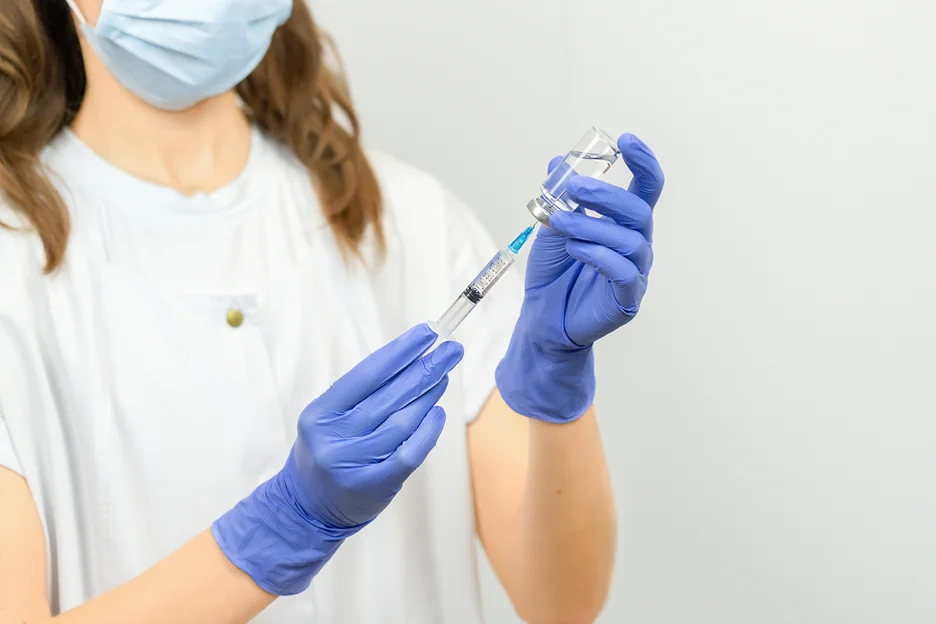
Manufacturers culture the source cells, collect the exosomes the cells release into the culture medium, and purify them. Purification methods include filtration, centrifugation, size exclusion chromatography (which separates particles by size) and immunoaffinity capture (which uses antibodies that bind surface proteins found on exosomes).
What Is PDRN?
PDRN is polydeoxyribonucleotide, a molecule derived from salmon DNA. Products sold as "PDRN exosome" combine PDRN with stem cell-derived exosomes.
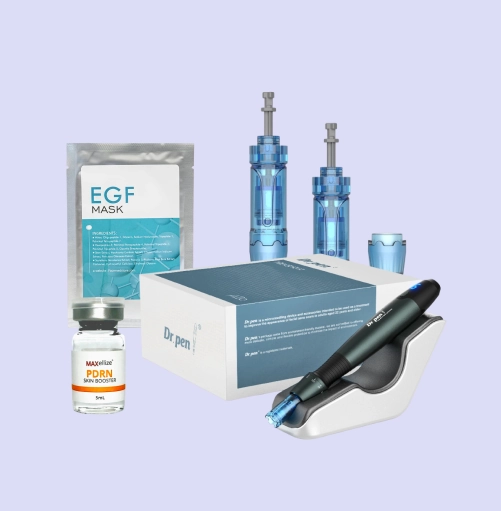
The Maxellize PDRN skin booster lists its mechanism as adenosine A2A receptor activation with fibroblast and collagen stimulation. To see how PDRN compares with PN, read the guide to PDRN vs PN skin boosters.
Exosomes and PDRN with Microneedling
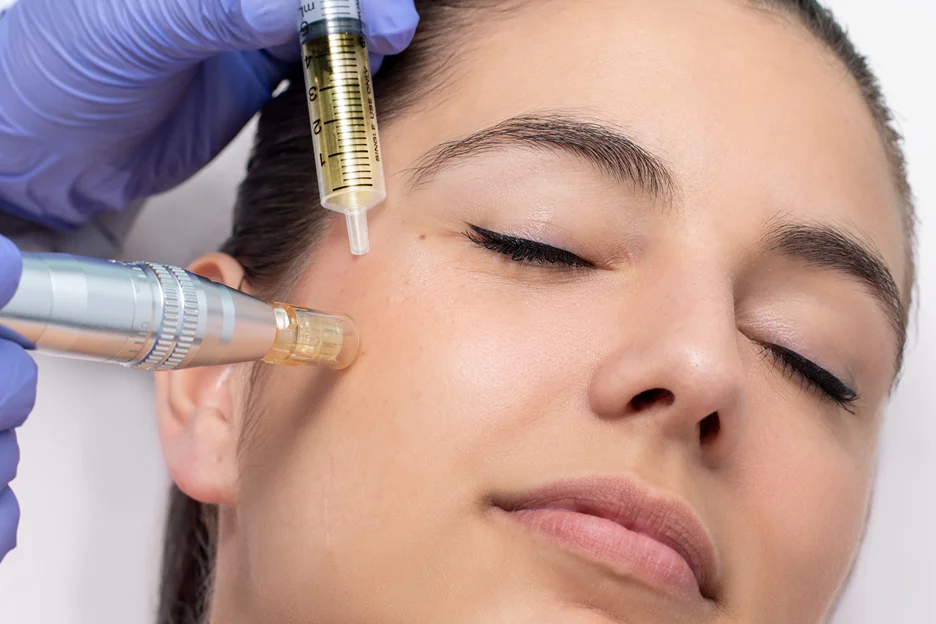
Both are applied topically right after a micro-injury treatment, into the microchannels while they are still open. Microneedling and fractional CO2 laser are micro-injury methods. Exosomes are also given by direct injection. This page covers the topical, post-procedure use listed for the two products below.
|
EL Exosomes |
Maxellize PDRN Skin Booster |
| Product type |
Professional exosome topical kit |
Post-treatment skin booster (topical) |
| Key components |
Exosome vesicles carrying growth factors and peptides |
PDRN (salmon DNA), copper tripeptide-1 (GHK-Cu), glutathione |
| Listed pairing |
Microneedling, laser and RF micro-injury treatments |
After microneedling or radiofrequency treatments |
| Application window |
Immediately post-procedure, into open microchannels |
Clean, post-procedure skin during the recovery phase |
| Use |
In-office finishing step |
Post-treatment topical |
EL Exosomes lists its storage as cold, at 1 to 30 °C (34 to 86 °F) as printed on the box, out of direct sunlight and away from damp places.
Pair either product with a micro-injury device such as one of our microneedling pens. For more on the combination, see microneedling with exosomes.
What the Research Shows So Far
The evidence for exosomes in aesthetics is early. Current findings:
- Pre-clinical studies, meaning laboratory or animal work, have explored exosomes for wound healing, scar modulation, alopecia and skin rejuvenation.
- Human clinical trials have begun, mainly in skin rejuvenation. Some use topical exosomes after a procedure such as laser or microneedling.
- Larger, more robust clinical trials are needed to establish efficacy, optimal dosage and long-term effects, and some trials return neutral or less conclusive results.
- Comprehensive long-term safety data is still being gathered.
For the hair loss side of the topic, see exosomes for hair loss.

Sourcing, purity and standards
Standards, sourcing and purity vary between exosome products. Open challenges in the field include consistent standards for isolation, characterization and quantification, the cost of manufacturing at scale, purity and batch-to-batch consistency, and keeping exosomes stable during storage and handling.
When you evaluate a supplier, ask these questions:
- Which cell source does the product come from, and under what culture conditions?
- Is there documentation that traces the product from the cell bank to the sealed vial?
- Which isolation method was used?
- What characterization data is available for each batch?
- Are sterility and endotoxin test results available?
- What in vitro (laboratory) and in vivo (animal) validation exists?
Characterization data usually comes from three techniques.
| Technique |
What it measures |
| Nanoparticle Tracking Analysis (NTA) |
Size distribution and concentration of particles |
| Flow cytometry |
Presence of specific surface marker proteins (for example CD9, CD63, CD81) |
| Electron microscopy |
Particle shape and integrity |
Regulatory Status
As of early 2025, exosome products are generally not FDA-approved as drugs for widespread cosmetic treatment in the United States. Some exosome products are used under investigational new drug (IND) pathways for clinical trials, and others are marketed as topicals that make no disease-treatment claims that would classify them as drugs.
Exosome products intended to treat, prevent or cure a disease are generally regulated by the FDA as drugs or biologics, which means an IND application and clinical trials before approval. The FDA has issued consumer alerts on unapproved regenerative medicine products, including some exosome products, stating that they have not been evaluated by the FDA for safety or efficacy.
"FDA-approved" means the FDA reviewed a product for a specific use. Marketing terms such as "FDA-compliant" or "lab-registered" do not confer approval of the product for therapeutic use. Verify a supplier's claims against that distinction.
Exosomes vs PRP
Exosomes and PRP differ in source and preparation: PRP is autologous, prepared from the patient's own blood, while exosome products are prepared in a laboratory from donor-derived or plant sources.
|
Exosome products |
PRP |
| Source |
Cells such as MSCs (donor-derived), or plant sources |
The patient's own blood |
| What it is |
Vesicles carrying proteins, lipids and nucleic acids |
A concentration of platelets in a small volume of plasma |
| Preparation |
Prepared in a laboratory |
Prepared at the point of care by centrifugation |
| Blood draw |
Not generally required for donor-derived products |
Required |
If you offer PRP, browse our PRP and PRF supplies.
Key Takeaways
- Exosomes are cell-derived vesicles that carry proteins, growth factors and nucleic acids. PDRN is a molecule derived from salmon DNA.
- Both are applied topically after a micro-injury treatment such as microneedling, into open microchannels.
- The evidence is described as early. Larger clinical trials are still needed, and long-term safety data is still being gathered.
- Sourcing, purity and standards vary. Ask suppliers for cell source, chain of custody, characterization data, and sterility and endotoxin results.
- Exosome products are generally not FDA-approved as drugs for widespread cosmetic use. "FDA-compliant" and "lab-registered" are not approval.
Related Resources
See the full range in our exosomes and PDRN products, or contact us with questions about a specific product.